
Palm Tree Directory Collections
Palm Tree did not exist as a town before 2019, so a pre-2019 Palm Tree city directory is not expected. The useful historical labels are Monroe, Kiryas Joel, Orange County, and sometimes a nearby city. The Orange County Genealogical Society, or OCGS, has the clearest documented regional directory shelf. Its published holdings list incomplete Middletown and Port Jervis city directories from 1899 through 1952 and incomplete Newburgh-area directories from 1899 through 1956. The public holdings page does not identify publishers or promise a complete Palm Tree household run, so each volume needs its own title-page citation.
Use the collections as a finding system, not as a complete resident list. A regional directory may include a business, a move, or an address that leads to a Monroe household record. It may also omit the person entirely. County books, atlases, deed indexes, census schedules, newspapers, and church indexes provide the needed checks when a directory gap appears.
| Collection | Years or scope | Where held | Access |
|---|---|---|---|
| Middletown and Port Jervis city directories | 1899-1952, incomplete | OCGS Research Room | In-person microfilm and reference access |
| Newburgh-area city directories | 1899-1956, incomplete | OCGS Research Room | In-person reference access |
| Directory of all directories | Dates not published | OCGS Research Room | Finding aid for a missing run |
| Orange County census books | 1825-1875 | County Clerk Record Room | Counter access; not online at inspection |
Note: A regional directory can supply a strong lead, but it should never be relabeled as a complete Palm Tree household list.
Reading Palm Tree Directory Entries
A city directory entry is an annual snapshot, not a modern identity record. For a Palm Tree research task, record exactly what the volume prints: spelling, initials, residence, occupation, business or employer, spouse or widow notation, and address. Some volumes also separate an alphabetic section from a street section. Owner or renter marks may appear, but their symbol and meaning must be read from that volume's own key rather than assumed from another directory.
Because no local sample entry was available in the public research, treat these as fields to capture when present, not promises that every volume contains them. A business address is not automatically a home address. Likewise, a surname match is not enough where English spellings, initials, transliterations, and former place labels can vary.
| Name and initials | Exact printed form, including suffixes and alternate spellings. |
|---|---|
| Residence | Street and number when printed; preserve the historical locality label. |
| Occupation or business | A dated activity clue, which may be distinct from the residence line. |
| Family notation | Spouse or widow wording when the particular volume includes it. |
| Volume citation | Title, year, page, shelf, film, or image number for later checking. |
- Criss-cross directory
- A street-ordered section that can lead from an address to the occupant line when the volume includes one.
- Householder index
- An index arranged around a household name rather than every person mentioned in a record.
- Abbreviation key
- The volume's explanation of shortened words and symbols, worth copying before interpreting an entry.
Palm Tree Directories Start Elsewhere
The key local quirk is jurisdiction, not a missing shelf. Palm Tree became a town on January 1, 2019, from former Town of Monroe territory around the coterminous Village of Kiryas Joel. Older directories, census books, newspapers, deeds, and tax material therefore normally use Monroe or Kiryas Joel. Search those labels before deciding that an annual volume has no relevant entry.
The county record trail is much older than the municipal name. County historical resources identify deed and mortgage material from 1703, census books for 1825 through 1875, and atlases for 1875 and 1903. Those materials do not replace a dated volume, but they help connect a household to roads, land, or a former jurisdiction when an entry is too thin.
| 1703 onward | Orange County deed and mortgage material identified in historical resources. |
|---|---|
| 1825-1875 | County census books, kept at the Record Room rather than online. |
| 1899 onward | Documented, incomplete regional directory runs at OCGS. |
| January 1, 2019 | Palm Tree begins as a town, changing the place name used in current records. |
Palm Tree Directory Shelf
The Orange County Genealogical Society Research Room is at the 1841 Historic Courthouse, 101 Main Street in Goshen. Its published inventory includes a master surname index, nearly 500 family genealogies, local histories, cemetery material, early tax records, and working papers in addition to the regional city-directory holdings. The room lists two copiers, two digitized microfilm or microfiche readers with laser printers, and one internet computer without online subscriptions. Equipment use is listed at 10 cents per page when leaving.
A volume request works best when it is narrow. Ask for a surname, the Monroe or Kiryas Joel label, a likely year range, and whether the volume has a street section. The directory of all directories can help locate a run that is not listed online. Record a page or film location even if the result is negative, since that prevents the same gap from being searched again as though it were new evidence.
The OCGS research-room listing shows the directory and microfilm setting used for Palm Tree historical research.
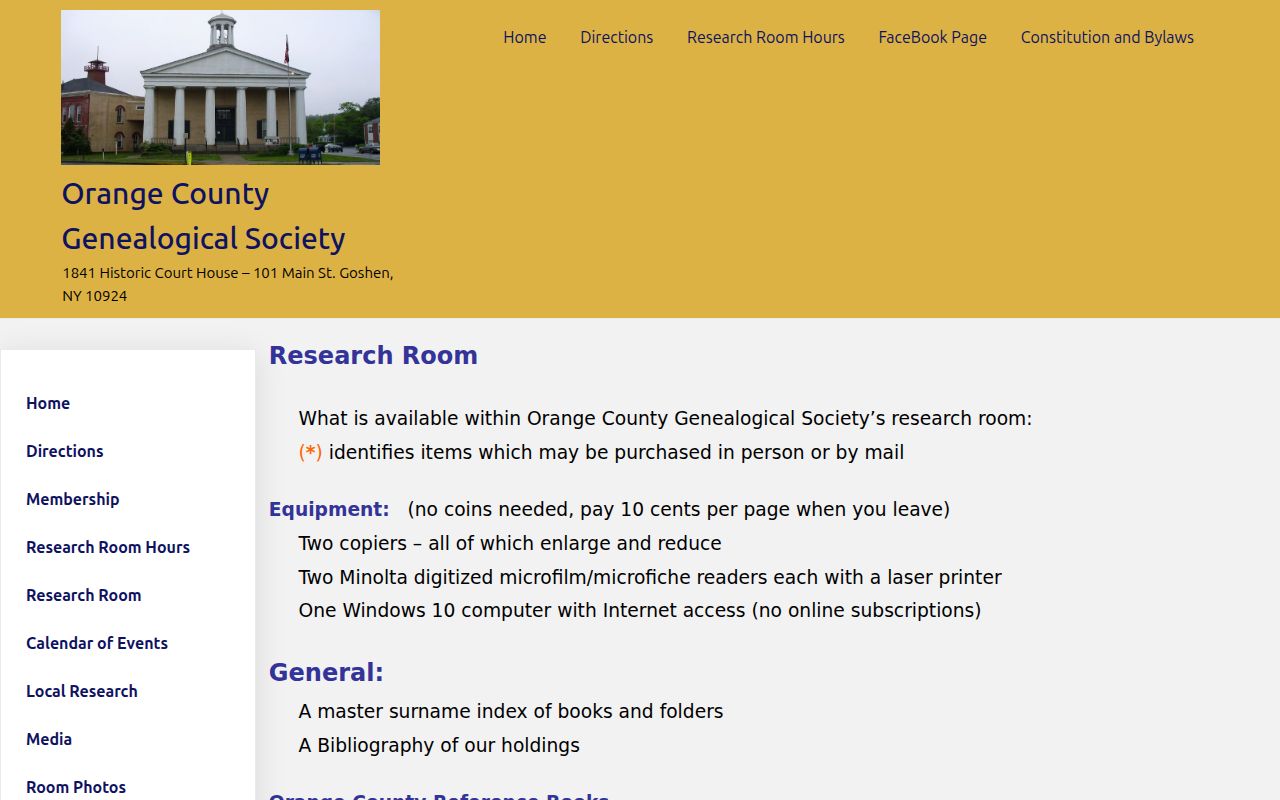
The screenshot reinforces why a regional collection and its access notes matter more than an unsupported claim of a Palm Tree-specific directory run.
Note: Check current access details before travel because the research-room collection is a reference path, not a guaranteed same-day search service.
Palm Tree Directory Research Rooms
Monroe Free Library is the named nearby public-library fallback for Palm Tree and Monroe research. It is at 44 Millpond Parkway in Monroe and publishes reference contact information, digital resources, and a Walk In Genealogy program. The public site does not list exact city-directory years, reverse-directory runs, obituary-index years, or newspaper microfilm holdings. Contact reference staff with the former place name and a year range before making the trip.
The County research route also directs family-history and cemetery questions to OCGS, while land, deeds, mortgages, maps, naturalization, and non-local vital questions belong with the County Clerk. Palm Tree's historian is listed as vacant in the genealogical-society clerk and historian directory. That makes the library, OCGS, County Clerk, county historian or archives, and town or village clerk the practical chain for a hard-to-find local record.
The Monroe Free Library reference page is a useful starting contact before searching an Orange County directory in person.
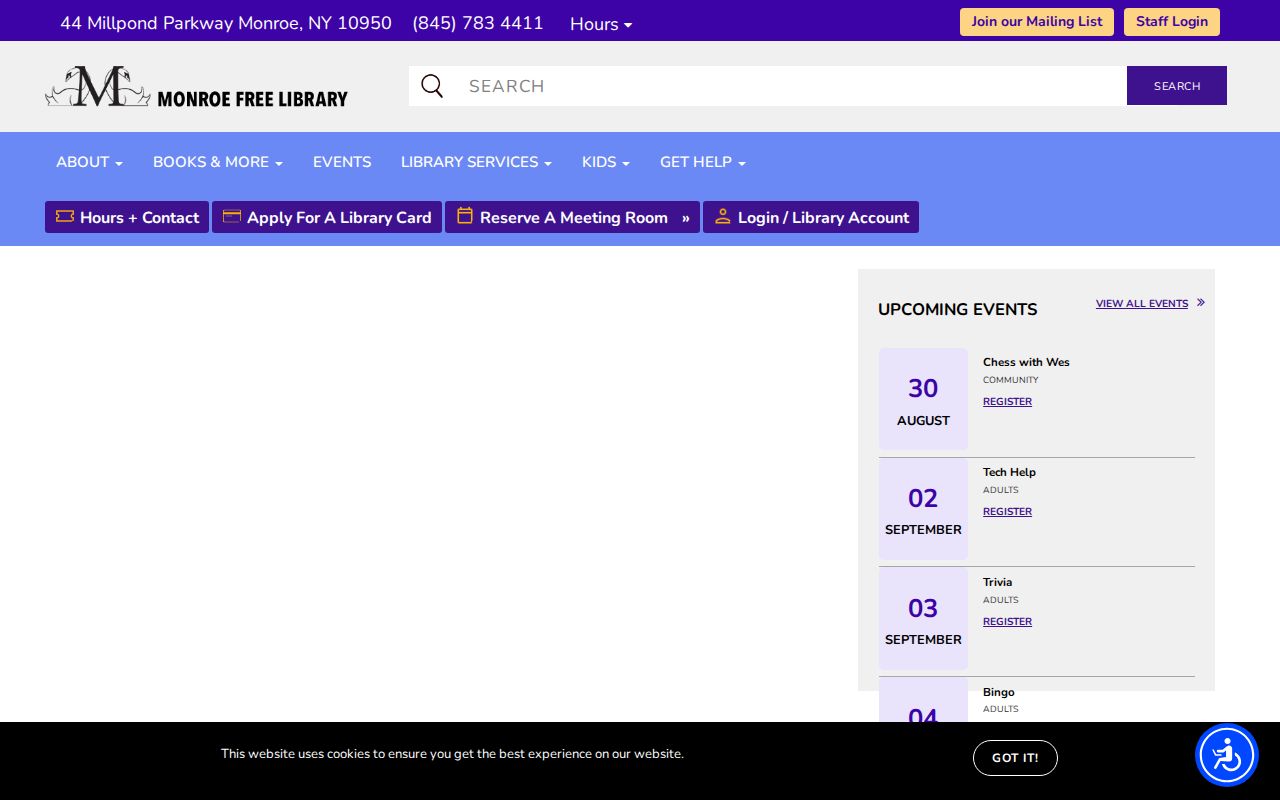
Library staff can verify whether a particular regional directory, yearbook, newspaper reel, or genealogy resource is actually available.
Tracing Palm Tree Directories
Use a household trail rather than treating a single entry as a conclusion. Start with the historical place name for the target year, capture the complete alphabetic entry, then compare the same person in nearby available years. A move, an initial, a spouse notation, or an address change can be useful, but each needs a second record before it becomes an identity match. This is especially important where a family name appears in both Monroe and Kiryas Joel sources.
- Choose the year and search under Monroe, Kiryas Joel, Orange County, or Palm Tree as the period requires.
- Copy the name exactly, then record residence, occupation, family notation, and the directory citation.
- Check the street or criss-cross section if the volume has one, keeping the historical address separate from a current address.
- Compare adjacent available volumes for a move, spelling change, or different business address.
- Pair the dated entry with a federal or New York census year, then test it against a deed, tax roll, obituary, or probate file.
- Preserve both records when they conflict and ask the keeper about a page, film, or indexing issue.
Federal census schedules supply a household snapshot at an enumeration date, while annual directories offer a more frequent address and activity snapshot when a volume survives. The 72-year release rule means 1950 is public while later federal census schedules remain closed as of the research date. County census books from 1825 through 1875 offer another route, but they remain counter-only.
Palm Tree Directory Companions
When no regional entry appears, use the collection that matches the question. The Orange County Historical Society collections include indexed church registers, tax assessments, local business material, and local-history collections. St. John's and Goodwill church-register indexes and 1779 tax assessments can be relevant to former Monroe-area research. These sources can place a person in a community or tax record, but they should not be presented as a private household roster.
Newspapers, cemeteries, naturalization, and military sources add dates and relationships that a directory often lacks. Orange County's official research page directs readers to Hudson River Valley Heritage Historical Newspapers and New York Heritage for regional digitized material. The County Clerk historical page identifies a naturalization index for 1802 through 1991, while OCGS holds cemetery and tombstone resources. Use the original place label in every search.
The Historical Society collections page shows the indexed local-history material that can fill a Palm Tree research gap.
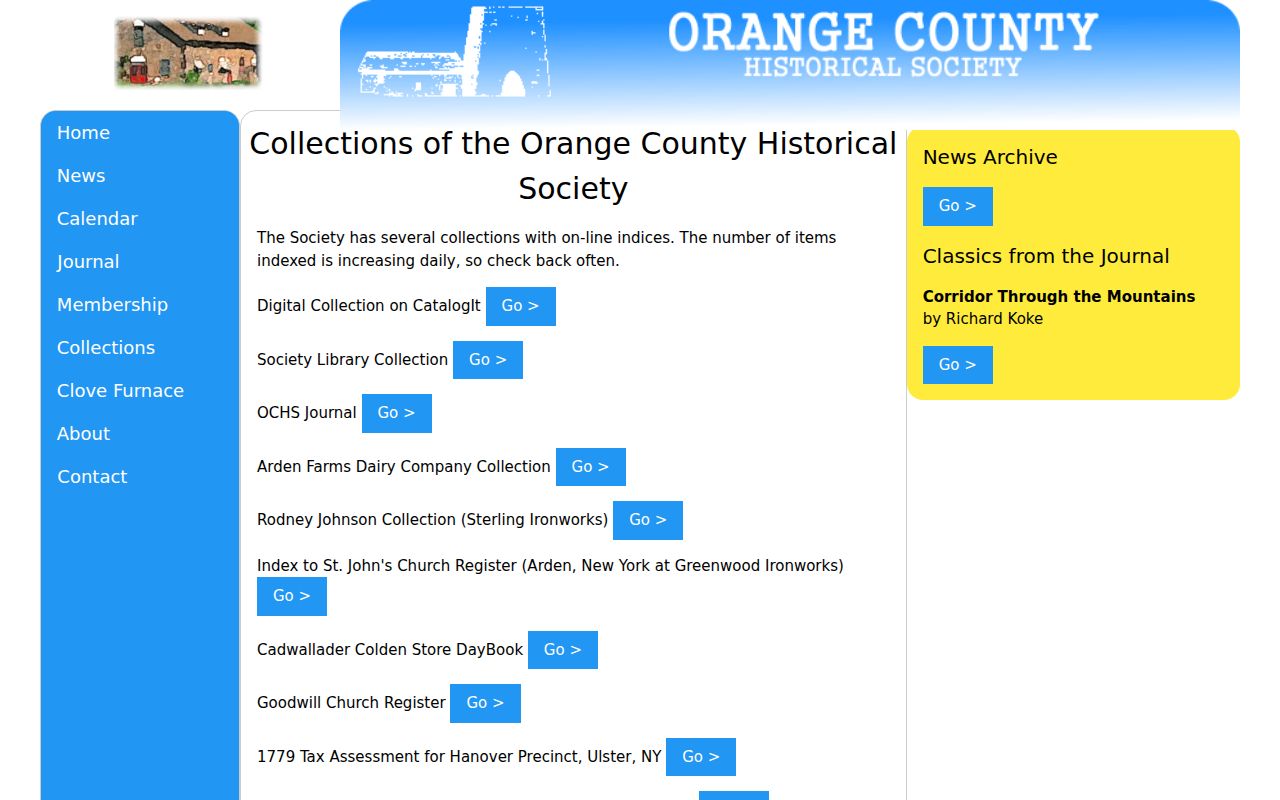
Indexed church, tax, and local-history collections are useful companions when a regional directory is incomplete or silent.
Note: A school, church, or cemetery reference is dated evidence, not proof of a person's current location.
Palm Tree Directory Citation Trail
Make each result reproducible. A usable citation names the collection, volume title, publisher if printed, place label, year, page, and shelf, film, or image location. Add the spelling exactly as printed and identify whether the line came from an alphabetic or street section. That detail matters when a later researcher needs to distinguish a former Monroe result from a current Palm Tree record.
The Orange County historical resources page provides the wider records ladder: older land material, census books, atlases, naturalization, military records, and court history. Its 1875 and 1903 atlases can explain roads and land references before a modern address or tax-map convention existed. The county's historic shelf also includes unusual early material such as the Cheesecock Marble Book and Quarter Session minutes, which can establish a county-level person trail long before Palm Tree was a town.
The County Clerk historical-resources page documents the archive routes behind a Palm Tree historical search.
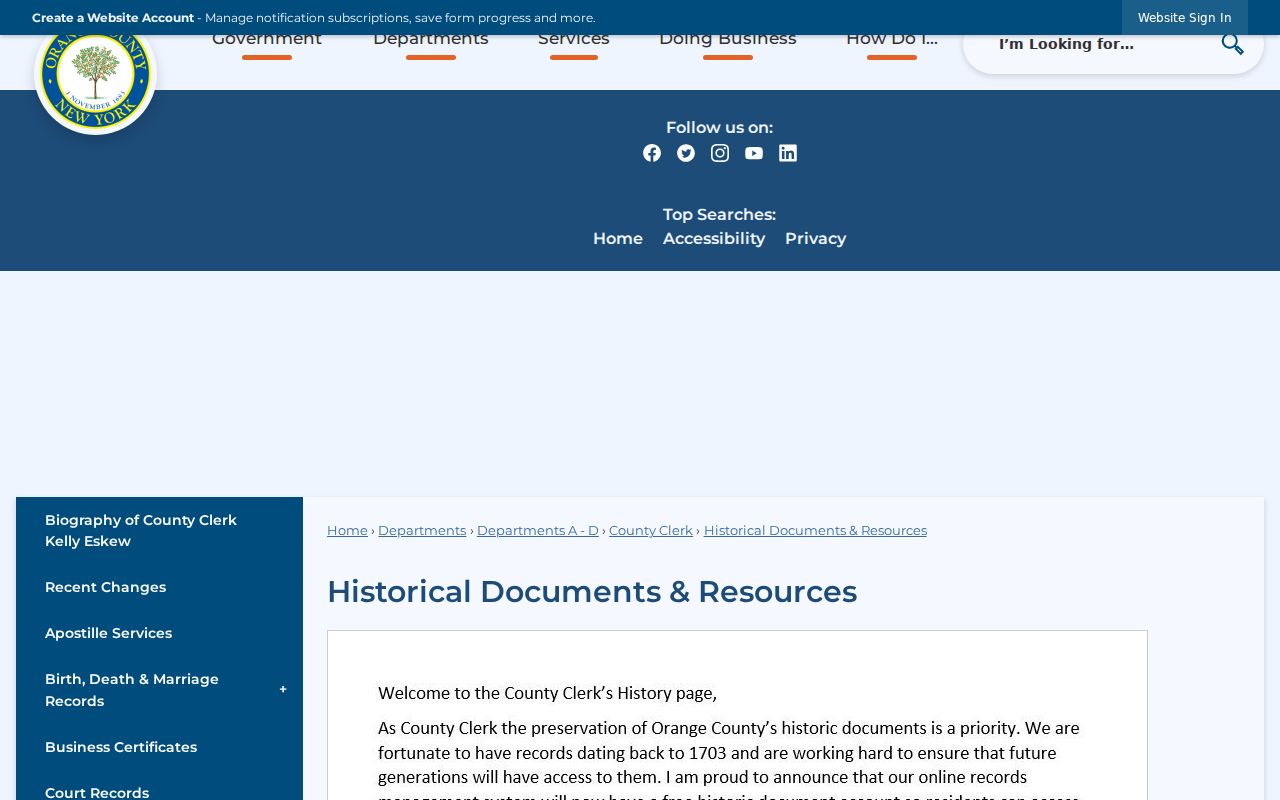
Directory research becomes more reliable when its yearly entries are linked to dated county records rather than repeated as unverified family lore.
Palm Tree Directory Access Choices
Access differs by collection. OCGS is the place to inspect regional directories, surname files, and microfilm. The County Clerk Record Room is the route for county census books and other historical county material. Some deed and mortgage images may be available through FamilySearch with a free account, while the Clerk's current SearchIQS access has different historical and modern paths. A library reference request is the best first check for a yearbook, newspaper reel, or a directory whose run is not published online.
Keep the tools in their lanes. An annual directory helps establish a dated entry. An atlas helps read places and roads. A deed index helps trace recorded land parties. A census schedule helps test household composition. Together they form a careful family-history trail without claiming that any one record identifies every person who lived at an address.
For a present-day address chain, use the Palm Tree street records route; it focuses on parcel and GIS records rather than rebuilding the historical directory shelf.